
AlgoThesis: market news, then what the stock did next
A market news site that keeps each story as it was written, dated, with both cases, and then records what the stock did at the next official close.
- Kind
- Our own product
- Launched
- Services
- Design
- Build
- Data pipeline
- Hosting
- Built with
- Next.js on Vercel
- Python API on Fly.io
- Supabase (Postgres)
- End-of-day prices from Databento
- Filings from SEC EDGAR
- Visit site
- algothesis.ai (opens in a new tab) ↗
What it is
AlgoThesis is a market news site. Its main page, the Wire, gathers the day’s stories about US-listed companies. Each story is dated, lists the outlets that carried it and when, sets out a bull case and a bear case side by side, and then shows what the stock did at the next official close. Its own line for this is “Follow the news. Track the move.”
It’s our own product. We designed it, built it and run it, and nobody hired us to make it. It opened to the public in July 2026.
Who it’s for
It’s for people who own a few US stocks and read market news, and who want to look back later and see whether a story actually lined up with a move in the price. Most news sites move on to the next headline. AlgoThesis keeps the story where it was and adds what happened next.
What we built
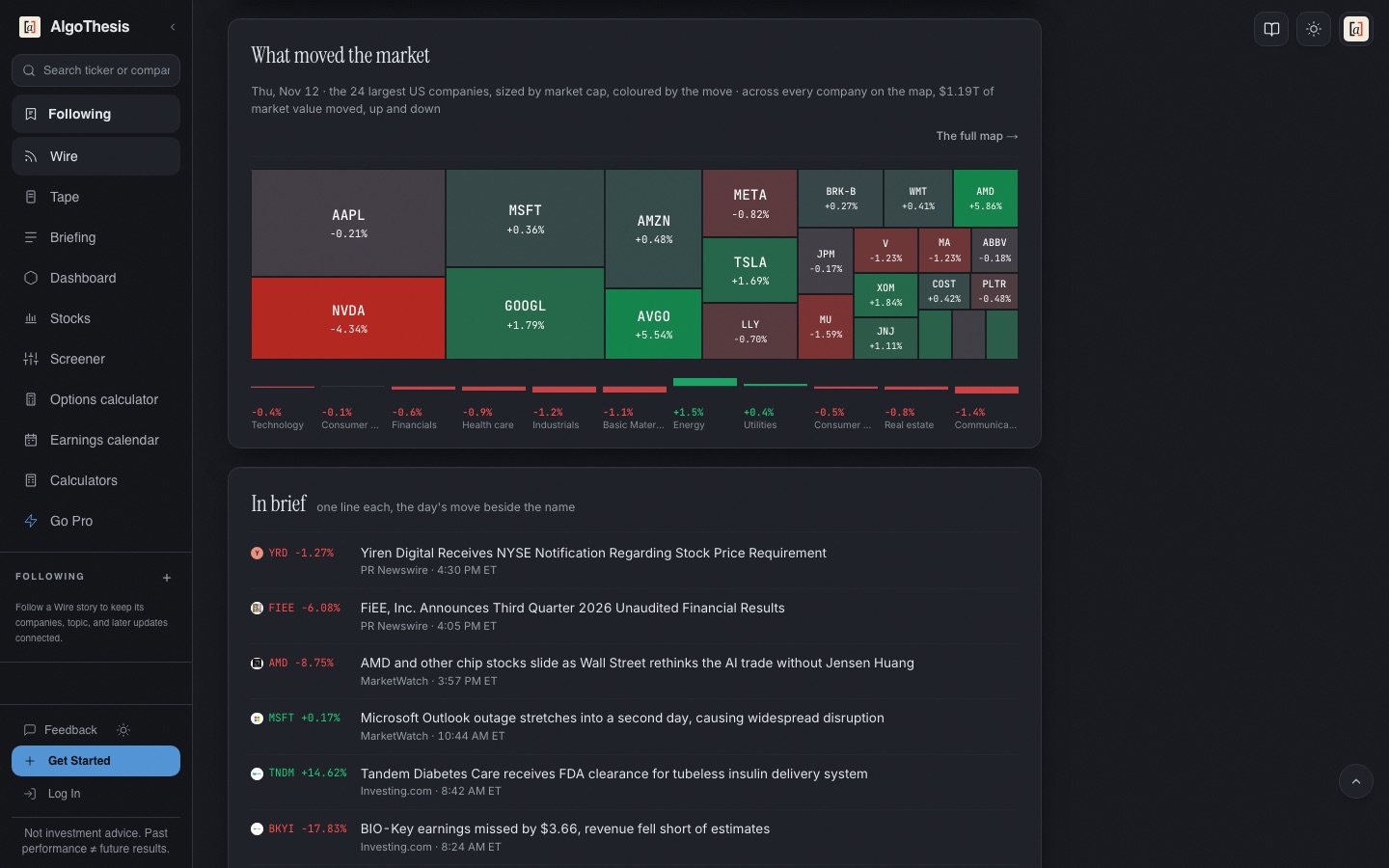
The Wire’s front page leads with the story of the day and a line explaining why it leads. Below it, the rest of the day’s stories are ordered by weight, each with the time it came in and the stock’s move at its last official close. A market map shows the 24 largest US companies, sized by market value and coloured by the day’s move. An “In brief” list gives one line per smaller story. A side panel called “Explained, or not” lists the day’s biggest moves among large companies and the story the Wire holds for each, or says plainly when there’s nothing in its sources.
Every story goes through the same process, which the site publishes in plain words on its “How the Wire is made” page:
- 1
Read the feeds
About fifty sources are read every few minutes: newsroom markets desks, the two big press-release wires, every 8-K filed with the SEC, and the Federal Reserve's releases.
- 2
Merge into one story
When several outlets report the same event, their reports become one story with all its sources attached.
- 3
Score and sort
Each story gets an importance score. Low scores are set aside, middle scores become one-line briefs, and high scores get a full write-up.
- 4
Write it once
A model writes the summary and both cases in the site's own words. An automated check approves it before it publishes, and it is never rewritten. Corrections are printed on the page with a date.
- 5
Record the move
For a story that leads with a US stock, the site records the first official close after the story against the close before it, then the move over the next three trading days.
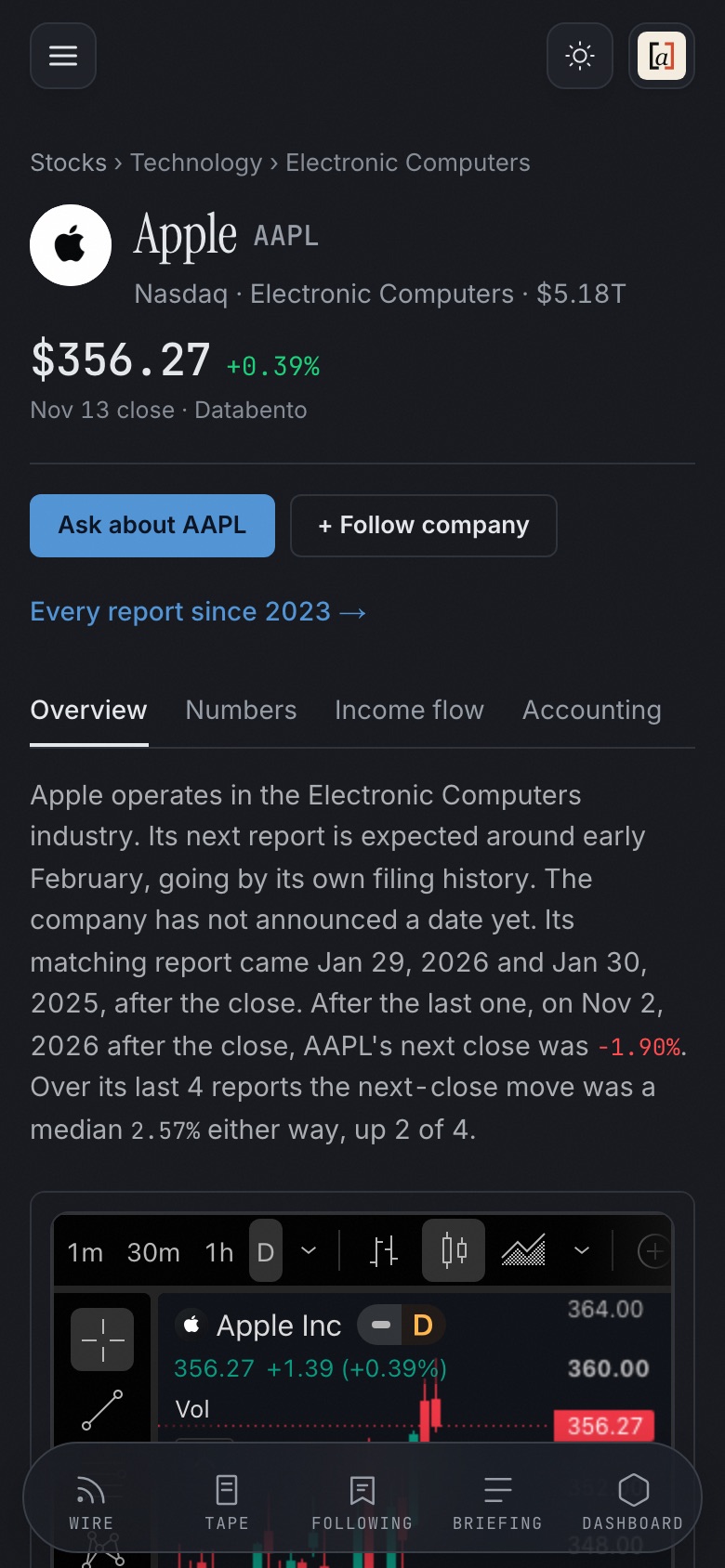
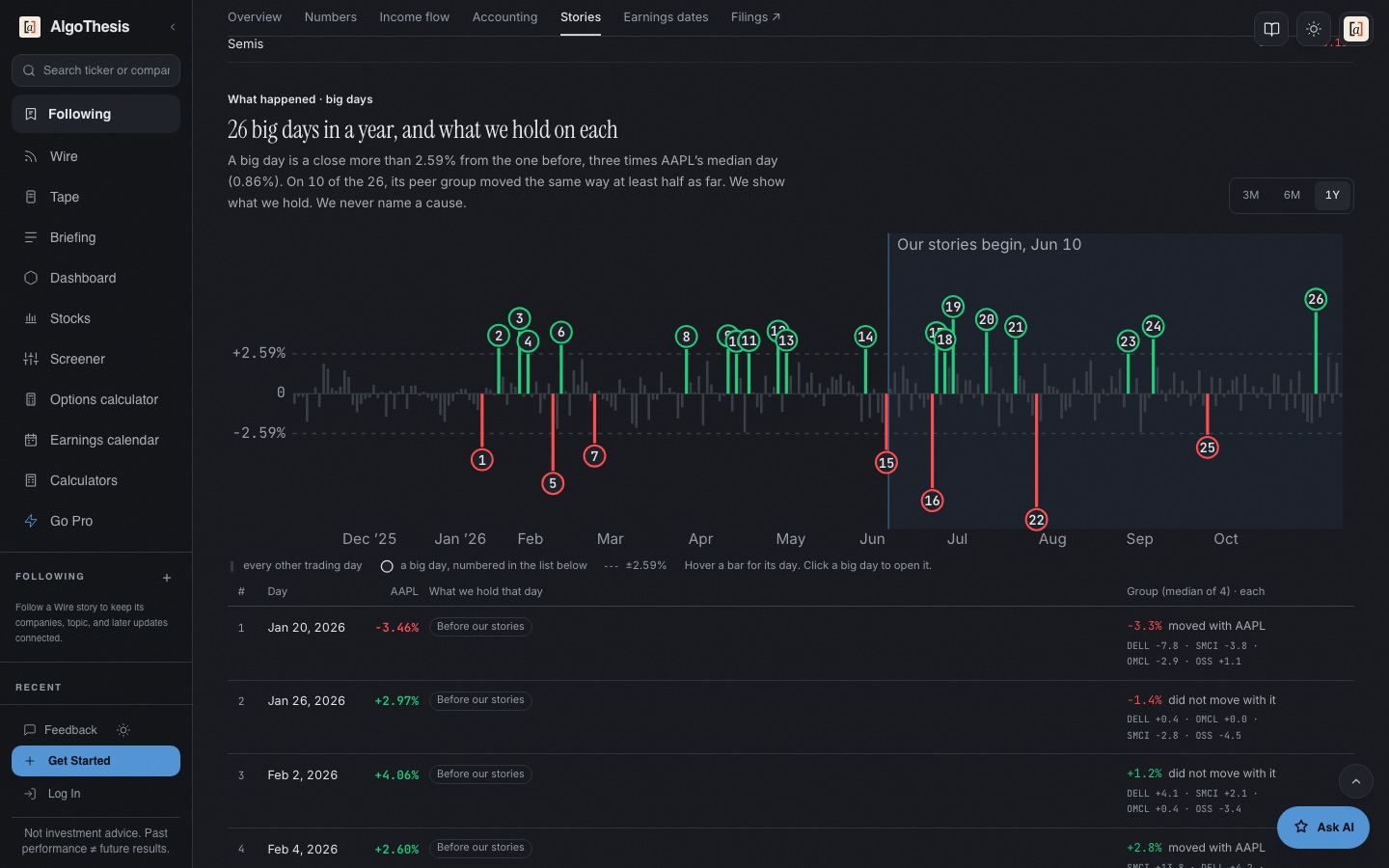
Each company has its own page. It opens with a plain overview, such as when the next earnings report is likely, judged from the company’s own filing history. Its “record” section counts the Wire’s stories by topic. It also marks every big day in the past year, meaning a close that moved more than three times the stock’s median daily move, and shows what the Wire held on each one. The page says it in so many words: “We show what we hold. We never name a cause.”
Readers can follow a story to keep its companies and later updates together, and get an email when its result settles. They can also pick a side on a story, privately, and see it checked against the close ten trading days later. Around the Wire sit an earnings calendar, a screener, an options calculator and everyday calculators for mortgages, dividends and percentages. An Ask box answers questions from the site’s own record first and declines to make buy or sell calls.
How it’s built
The pages run on Next.js on Vercel. Behind them, a Python API on Fly.io reads the feeds, merges and scores stories, and runs the evening jobs. Supabase holds the stories, accounts and follows in a Postgres database.
Prices are the part we were strictest about. Every price is an official end-of-day closing price from Databento, labelled with the date of the session it belongs to, and the site credits Databento on its pages. Nothing is intraday and nothing is a live quote. Company filings come from SEC EDGAR.
What this means for your site
Most small business sites need none of this machinery. If yours is a few pages that rarely change, a website builder may be all you need, and our comparison of Wix, Squarespace and a custom site explains when.
Two habits from AlgoThesis do carry over. Date what you publish: prices, opening hours and service details all go stale, and a visible “updated” date tells people they can trust what they’re reading. And if a number on your site changes often, such as availability, a wait time or stock on hand, it’s usually worth having the site pull it automatically so it never drifts out of date.